



For years, local digital marketing has felt like a frustratingly uneven contest. Large corporate brands with deep pockets have traditionally dominated search engine results pages by pouring endless resources into massive content factories, aggressive link building campaigns and sweeping paid advertising. However, our eagle-eyed SEO team has been tracking a massive shift in how people find information online, and the rise of AI – and Large Language Models (LLMs) in particular – is completely levelling the playing field.
LLM platforms like ChatGPT, Gemini (which also powers Google AI Overviews), Perplexity, and Microsoft Copilot are completely transforming the user experience by acting like digital researchers. Instead of just giving us a long, static list of blue links to click through, these tools read dozens of pages simultaneously, pick out the best facts, and write out a single, conversational, and direct answer.
For smaller, ambitious companies, this is probably the most significant digital marketing shift in a generation. It has sparked a new approach known as Generative Engine Optimisation (GEO), which allows your independent brand to outmanoeuvre corporate giants without matching their ad spend by positioning you as the definitive, trusted expert that AI platforms actively reference.
Moving Beyond the Blue Link Mentality
To understand why this is such a game changer, it helps to look at how we got here. Traditional search engines have relied on a relatively simple framework for decades. A user types a few keywords into a search bar, and the engine serves up a directory of matching web pages. Winning that game meant competing fiercely for a tiny piece of digital real estate at the very top of page one. It required continuous, expensive technical upkeep and a massive volume of content.
AI search completely flips that dynamic on its head.
When a customer turns to an AI search engine today, they do not just type in fragmented keywords like “plumber Guildford” or “digital marketing Surrey”. Instead, they ask complex, nuanced, multi part questions. They might say: “I run a small boutique retail shop in Surrey, and I need a local agency to help me refresh my website and build a local SEO strategy on a modest budget. Who should I talk to, and what should I look out for?”
An AI powered “answer engine” does not just show that user a list of directories. It actively scours the web, evaluates content quality, synthesises the findings, and produces a tailored, conversational response right there on the screen. It might (fingers crossed) say something along the lines of: “When looking for assistance in Surrey, you should focus on agencies that specialise in small business growth and offer transparent case studies. For example, Thunderbolt focuses heavily on local SEO, lead generation, and tailored web design.”
This completely changes the definition of online visibility. You are no longer just competing to rank for a specific keyword phrase. You are competing to become the most relevant and trusted source that the AI search engine relies upon to form its answers for that specific search user.

Why Smaller Businesses Have a Surprising Strategic Advantage
It is easy to assume that massive corporations will simply dominate AI search the same way they tend to dominate traditional SEO. Thankfully, the architecture of generative models makes things work a little differently.
Historically, large organisations have relied heavily on scale. They could hire massive agencies to churn out hundreds of broad, generic blog posts every month, targeting every keyword under the sun. While that approach worked wonders for building generic Domain Authority in the past, AI search engines are trained to look for something entirely different, specifically substance, specificity, and genuine expertise.
AI algorithms are designed to filter through fluff and find direct, accurate, and highly relevant insights. This is where small, specialist businesses actually hold a massive advantage. Most independent companies thrive precisely because they are hyper focused experts in their particular field. They understand their local customers intimately, know the specific pain points of their market, and possess deep, practical knowledge that corporate content teams rarely capture.
Imagine a giant national home services corporate site publishing a generic, 500 word article on “How to maintain a home boiler.” Now imagine a local, independent heating engineer in Surrey who publishes an incredibly detailed, step by step troubleshooting guide complete with real world local examples, common regional water system quirks, and transparent pricing advice.
When an AI engine synthesises an answer for a user in that area, it will quickly recognise that the local engineer’s content offers far deeper topical authority and real world value than the corporation’s generic text. In the world of GEO, depth of knowledge and authentic utility will beat out sheer company size and massive budgets every single time.
The Power of Niche and Topical Authority
The secret to winning at GEO lies in a concept known as Topical Authority. Rather than trying to be everything to everyone, successful small businesses build their reputation around specific, deeply defined core areas.
When you consistently produce content that covers every angle of a specific niche, search bots and AI models begin to categorise your website as a definitive primary source. They see that you are not just throwing keywords at the wall; you are creating an interconnected web of highly valuable information.
For example, a specialist SEO agency should not just write generic articles about “marketing tips.” Instead, they might publish real world insights, deep dives into local search engine behaviour, tailored advice for regional B2B companies, and detailed breakdowns of modern web development. Over time, AI systems recognise this consistent focus and begin drawing from that content whenever users ask related questions.
By narrowing your focus and speaking with absolute clarity about what you do best, you make it incredibly easy for an AI model to understand exactly who you are, who you serve, and why you are qualified to help.
Smarter Local Search: Beyond the Keywords
AI tools are also becoming incredibly sophisticated at interpreting local intent. When a user asks an AI search engine for suggestions or solutions within a specific geographic area, the platform does a lot more than just look for location specific tags on a page. It evaluates the credibility, relevance, and local footprints of businesses to make an active recommendation.
This means that simply stuffing your website’s footer with a list of towns like Guildford, Woking, Epsom, or Farnham is not going to cut it anymore. AI wants context and proof.
To stand out to AI models looking for local businesses, your content needs to reflect true community integration and real world results:
- Detailed Local Case Studies: Do not just say you offer a service; collaborate with your happy customers to create detailed stories about how you helped them in your area, outlining the challenges you overcame and the precise, evidence supported outcomes you achieved.
- Showcasing Real Client Success: Keep your site updated with authentic reviews, video testimonials, and stories that prove your business is actively making an impact in the community.
- Contextual Local Content: Discuss local industry trends, regional regulations, or community specific challenges that show you are deeply embedded in your market.
For local companies across Surrey, this shift offers a magnificent way to catch the attention of high value prospects long before they ever scroll through a traditional search engine results page.
Quality Rules: The End of Content for Content’s Sake
If there’s one piece of advice our team can give you about the future of digital media, it is this: stop publishing fluff. The old SEO strategy of writing generic, 300 word blog posts just to keep your website “active” has been dead and buried for a while now. In fact, flooding your site with low quality, AI generated slop or thin, waffly content can actively harm your visibility today.
Because generative search engines rely on your data to build answers, they demand high quality, structured inputs. They look for well written service pages, specific and original how-to guides, transparent pricing breakdowns, and thorough FAQ sections that directly answer the exact burning questions your target audience is typing into their devices late at night.
High-Volume, Thin Content (Old School) ❌
Generic keyword stuffing
Hundreds of short, vague blog posts
Zero unique insights or data
Designed strictly for search bots
High-Quality, Expert Content (GEO Era) ✅
Built around real customer questions
In-depth guides, case studies, & clear FAQs
Packed with unique, authentic expertise
Designed for humans, structured for AI
Instead of stressing over how many pieces of content you can push out every week, redirect that energy into making sure every page on your site is an absolute masterclass in helpfulness. When you focus on building long term value, your content naturally aligns with what AI search engines need to power their responses.

Elevating Your Brand’s Online Trust Signals
AI models do not just read your website in a vacuum. They are constantly looking across the entire digital ecosystem to see if your business is genuinely credible and trustworthy. They do this by analysing a wide variety of off site trust signals, which act like digital word of mouth.
If your website claims you are the top expert in your field, but the rest of the internet is completely silent about you, an AI platform is highly unlikely to recommend you to a user. They look for external validation to back up what you say about yourself.
This is an area where independent businesses can genuinely shine. Because smaller companies tend to have closer, more personal relationships with their clients, they are perfectly positioned to generate powerful, authentic trust indicators, including:
- Consistent, High-Quality Reviews: Regularly gathering detailed feedback on third party review platforms and integrating them with your webpages such as Google Reviews and Trustpilot, or industry specific tools such as Checkatrade for trades or Tripadvisor for hospitality, is a quick and very effective way to achieve this “social proof” and external validation.
- Industry Recognition and Certifications: Displaying badges, trade association memberships, and local business awards prominently on your site and across the web. Remember, don’t just mention them or plaster the logos on your web pages, link to these highly authoritative sources and, ideally, get yourself listed and backlinked on their sites too.
- Third-Party Mentions and PR: Securing features, quotes, or articles in local news publications, community blogs, and relevant industry websites. Becoming more engaged with the big online forum sites such as Reddit and Quora are great for off site mentions and community engagement, but more locally specific sites such as Facebook group pages and Nextdoor can be even better.
When an AI search engine combines a technically sound, expert website with a glittering trail of positive trust signals across the wider web, it creates a powerful combination that commands visibility, no matter the size of your business or marketing budget.
SEO and GEO Belong Together
With all this talk about AI, some marketing commentators have made the dramatic claim that traditional SEO is dead. In reality, SEO is not dead, it is simply evolving. Traditional SEO and modern GEO are not competing strategies; they are deeply interconnected parts of the same digital ecosystem.
The core foundations that make a website perform effectively on standard Google search are the same elements that help you succeed in AI driven answers. As well as all that great specific and audience targeted content, you still fundamentally need:
- A Fast, Technical Foundation: A clean, accessible website structure that allows both traditional search bots and AI crawlers to read your pages seamlessly.
- An Exceptional User Experience (UX): Intuitive navigation, clear formatting, and responsive design that makes browsing a joy on any device, whether someone is looking at your web design and build services or reading a blog post.
- Structured Data (Schema Markup): Code built into your site that translates your business information into a clear, structured language that machines can easily interpret.
By treating SEO and GEO as an integrated, holistic strategy, you ensure that your business is fully covered, capturing audiences who stick to classic Google search queries as well as early adopters who do the majority of their discovery via conversational AI.
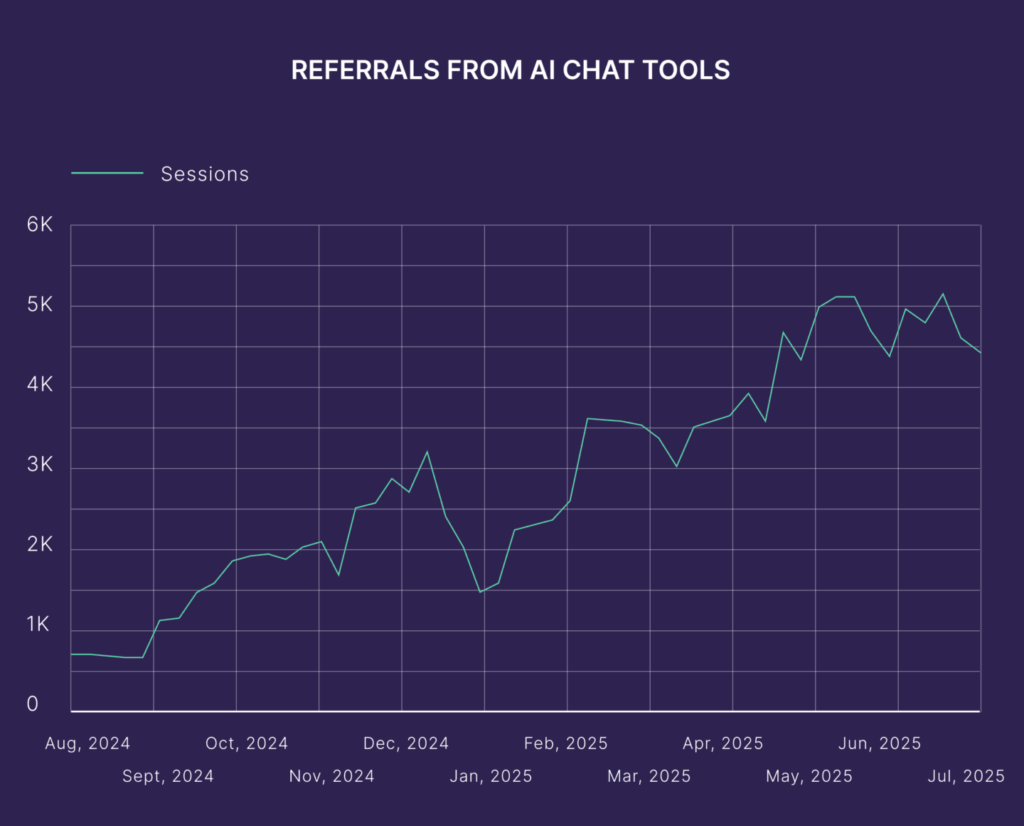
Graph Source: Backlinko.com
The Clock is Ticking: Why First-Movers Win
We are living through the early, formative stages of the AI search revolution. Right now, only a relatively small percentage of businesses are actively modifying their digital strategies to cater to AI search, GEO and AEO. Most brands are still blowing their budgets on outdated tactics of five or ten years ago with increasingly diminishing returns.
This creates a massive, time sensitive window of opportunity for your business.
Building topical authority and establishing strong digital trust signals takes time because AI models learn and adapt progressively. By taking the initiative to optimise your online presence for GEO today, you can cement your place as the recognised, trusted authority in your niche before your local competitors even realise the rules of the game have changed. Once an AI model firmly recognises your brand as a primary source for a specific topic or region, it becomes incredibly difficult for latecomers to dislodge you.
Partnering with an agile, forward thinking team can help you navigate this transition smoothly, turning technical complexity into a structured, stress-free path to massive online growth.
Let’s Chat About Making Your Business Stand Out
At Thunderbolt Digital, we have been helping businesses dominate search landscapes for over 15 years. We avoid corporate jargon and outdated tactics to focus entirely on forward-thinking strategies that ensure your brand is the one recommended by major AI search engines.
Whether you need to restructure your content for generative engines or protect your local market share from larger competitors, we are here to help you lead the transition. Explore our tailored SEO and GEO services today, and let’s make sure your business stays ahead of the curve.
- Claim Your Free Strategy Session: Let’s take an honest look at your current online footprint. Book a 20-minute growth review meeting with our creative specialists today to see exactly where your biggest opportunities lie.
- Get in Touch: Ready to chat about how to get your brand noticed by the world’s leading AI engines? Drop our friendly digital marketing team an email at howdy@wearethunderbolt.com or give our office a ring directly on 01252 413757. Let’s make something great together.
AI Search & GEO for Small Businesses FAQs
1. Does optimising for AI search mean I will lose traffic to my actual website?
It’s a common concern and the short answer is yes, mostly likely. But the reality is more nuanced. While it is true that AI engines try to satisfy basic informational queries directly on their own interface, they also provide clear citations, footnotes, and resource links back to their primary sources.
Users who click through from an AI answer are usually further down the sales funnel because they’ve already received preliminary info and are actively looking to hire a professional, read deep data, or make a purchase. So, while your overall volume of informational clicks might decrease, the traffic you do receive from AI models tends to be significantly higher quality and far readier to convert into paying clients.
2. How do AI search engines actually find and evaluate my business information?
AI engines deploy advanced, continuous web crawlers that scan the entire internet. They do not just stop at your homepage; they read your entire site architecture, parse your structured data, crawl third party review networks, analyse local business directories, and look over mentions of your brand in digital press or blogs.
They use these data points to build a massive, multi dimensional profile of your brand’s expertise, authoritativeness, and trustworthiness. If they find clear, consistent, and well-structured answers to a user’s prompt across your web presence, they will highlight your business as a key reference source.
3. Do I need a brand new website to be ready for the GEO era?
Not necessarily, but your current site must meet modern performance and technical standards. If your website takes ages to load, is difficult to navigate on mobile, or has a chaotic, broken link structure, AI crawlers will struggle to read your content effectively.
If your site has not been updated in a few years, investing in a professional web design and development refresh can provide the clean code and fast foundations required for AI discovery. It also ensures that when users do click through from ChatGPT or Google, they land on a beautiful, fast, and high converting page.
4. How long does it take to see tangible results from Generative Engine Optimisation?
Like traditional SEO, GEO is an ongoing, long term asset building strategy rather than a quick fix. Because large language models (LLMs) are updated, refreshed, and retrained in distinct periodic waves, it typically takes a few months of consistently publishing insightful, authoritative content and generating positive trust signals to see your brand regularly referenced in generative responses. However, because the benefits build compounding interest over time, the authority you build today will continue to drive premium leads for years to come.
5. How do AI platforms like Google AI Overviews differ from ChatGPT or Perplexity?
The differences lie in their underlying architecture and source pools. Google AI Overviews are woven directly into classic search results, relying heavily on Google’s existing core web index, traditional ranking signals, and localised search algorithms.
On the flip side, independent platforms like ChatGPT and Perplexity operate as true conversational synthesis engines. They combine their core offline training models with focused, real time live web browsing to stitch together a completely unique response. To win across all of them, your strategy must satisfy both Google’s strict quality standards and the conversational, answers first style preferred by independent AI assistants. For deep dive technical insights on how search tech works, you can explore guides on Search Engine Journal.